Chapter 7: Sepoy’s Lament
The story
Some histories don’t sit quietly in the past. They
live on in wounds that are too deep to ever heal.
Sepoy’s Lament is my attempt to give voice to one of those histories through the well known refrain of a piper’s lament.
The song grew from a conversation with a British friend – intelligent, compassionate, well-travelled – who told me she had felt a deep, personal shame when visiting the site of the Jallianwala Bagh massacre in Amritsar. That moment struck me. Here was someone whose own ancestors may not have been directly involved, yet who still felt the moral weight of what had been done in Britain’s name. That’s what empathy can do – it reaches across time and identity, and says: This was wrong. I feel it, too.
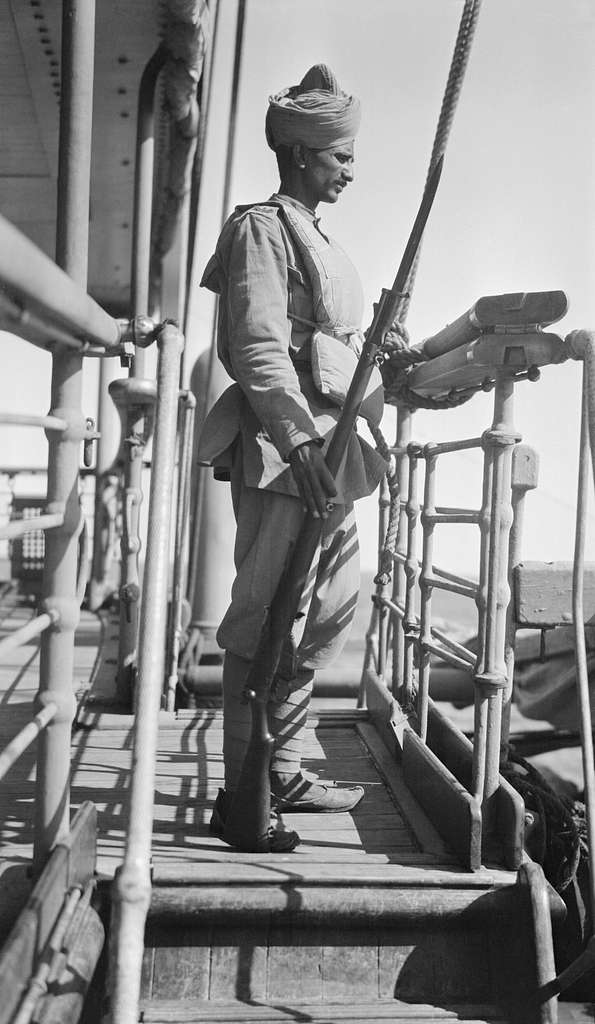
And then I wondered: what of the Indian soldier,
the sepoy, who was caught in the machinery
of empire? What did he feel that day? Pride in
his uniform or fear of his commanding officer?
The horror at what unfolded before him that
day must have only become apparent when the
shooting stopped and he surveyed the scene
before him.
Sepoy’s Lament gives voice to that imagined
man. He is not a hero. He is not a villain. He is a
witness – and maybe, also, a prisoner of a role he never fully chose. For many Indian soldiers under British rule, there was honour in the uniform and the pay, but also shame in the obedience it demanded. Some believed they were serving a noble cause. Others simply needed work. But on days like April 13, 1919, the illusion shattered.
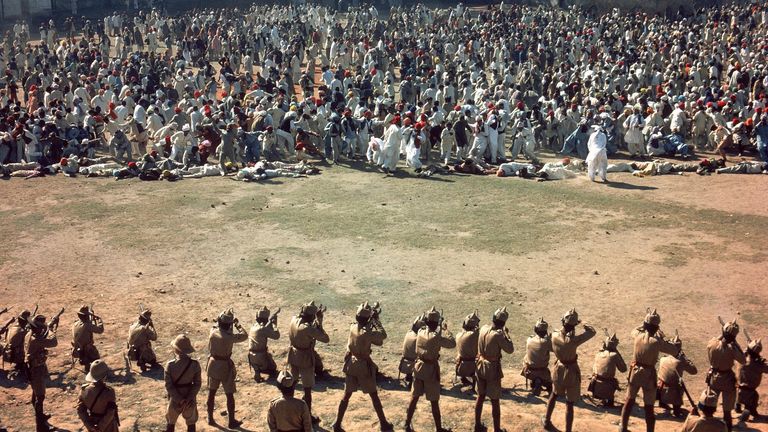
The massacre at Jallianwala Bagh was not
a battle. It was a slaughter. Over a thousand
unarmed civilians – men, women, and children –
gathered in a walled garden to protest peacefully.
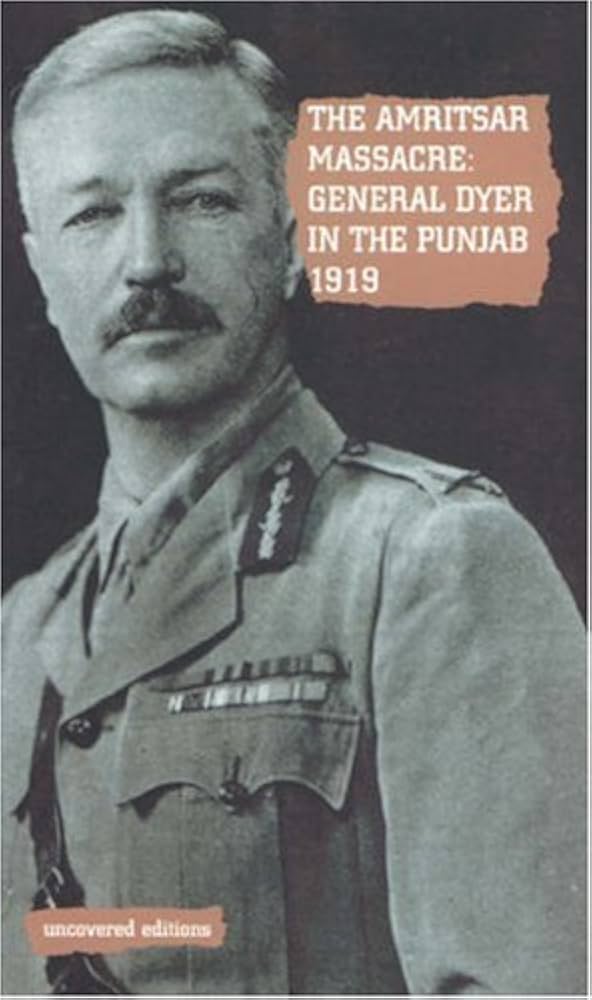
British Brigadier-General Dyer gave the order.
The troops, many of them Indian, obeyed. They
fired until their bullets ran low. There was no
escape. No warning. No mercy.
In writing the song, I imagined the sepoy not just
as a man caught in a uniform, but as a human
on his deathbed recalling his countrymen fall.
Hearing the screams. Feeling the recoil of his
rifle. Asking his God to forgive his debt.
Could he have refused to pull the trigger and risked the wrath of General Dyer his tyrannical commanding officer.
These are the moral wounds left by empire – not
just for those it colonised, but also for those it
used.
And yet, there is something hopeful, or at least
redemptive, in remembering and singing this
lament. About telling the truth of what happened
without accusation, and more as a reckoning.
My friend’s shame was not weakness. It was
conscience. And in writing this song, I wanted to
hold that alongside the sorrow, the anger, and
yes, the lament. Not to assign blame, but to say:
Come all you young soldiers this madness reject.
Lyrics
I remember so well that burning hot day
The city had gathered to have their say.
A line of armed soldiers stood in khaki and sweat,
To save an empire where the sun never set.
Caught in between my oath and my kin,
This soldier’s loyalty runs quite thin.
Striking the unarmed my conscience objects,
To save an empire where the sun never sets.
The colonel’s face twisted with every rant.
Give us our freedom the crowd did chant.
We fired our carbines, I’ll never forget,
To save an empire where the sun never sets.
Round after round the innocent were slain.
Wherever they ran the shots fell like rain.
My part in that crime I’ll always regret,
Trying to save an empire where the sun never set.
And now the empire is past and gone.
The killing the dying goes on and on.
I ask the good Lord to pardon my debt,
Come all you young soldiers this madness reject.
This madness reject, this madness reject.
Come all you young soldiers and let the sun set.