Chapter 5: Khan Of The Wire
The story
Some heroes wear medals. Some leave
monuments. But some, like Noor Inayat Khan,
leave silence – profound, echoing, and harder to
carry than brass or stone.
Her story begins in a most unassuming place:
music, poetry, and peace. Noor was born in 1914
to an Indian father – a Sufi musician and teacher
– and an American mother. She was raised in a
spiritual household, rooted in compassion and
nonviolence. She wrote children’s stories. She
played the harp. She believed in the unity of all
faiths. In another world, perhaps she would have simply been remembered for her art. But the world she inherited was on fire.
Noor chose to act.
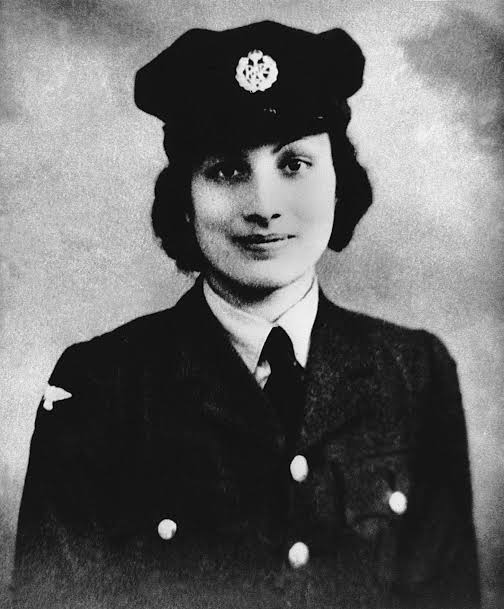
Despite being a pacifist, she volunteered for
Britain’s Women’s Auxiliary Air Force during
the Second World War and was eventually
recruited into Churchill’s secret army – the
Special Operations Executive. Her mission: to be
parachuted into Nazi-occupied France and act
as a wireless operator. It was one of the most
dangerous roles in the resistance. The average
life expectancy for operators like her was six
weeks.
She lasted three months.
This song, Khan of the Wire, captures this duality: the inner gentleness of a woman who believed in nonviolence, and the outer courage of a fighter who risked everything for others. “To conquer the darkness her courage she’d hold.” That line says everything. Khan did not conquer with guns or rage, but with resilience and spirit. A Sufi warrior in a battle that required not just skill, but soul.
She was betrayed, captured, and imprisoned by
the Gestapo. They tortured her for months – her
name, her codebook, her network. She gave them nothing. Even when shackled and isolated, she remained defiant. It’s said her last word, before she was executed at Dachau, was “Liberté.”
It took decades for the world to catch up with
Noor. A woman, an Asian, a Muslim, a pacifist –
she did not fit the traditional mould of military
heroism, and history often has a blind spot for
such people. For years, her name faded, even
among those who should have known it. But like
the tree in this song – “They buried her name, yet it grows like a tree” – her memory persisted. First among the Sufi community in Britain, and then gradually, more widely.
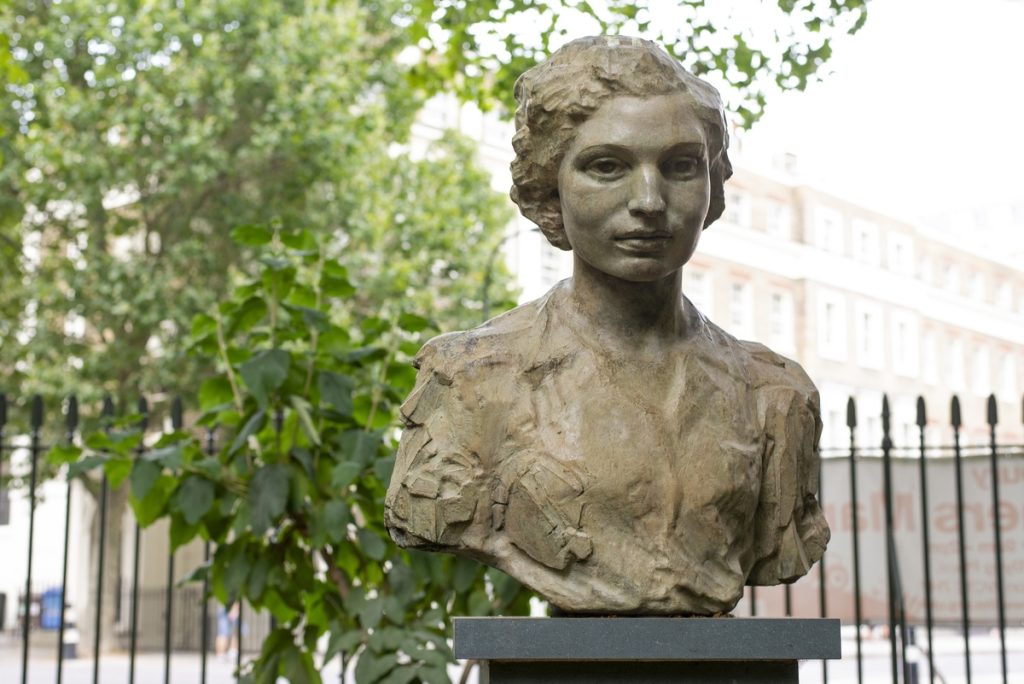
In 2012, a bronze statue of Noor Inayat Khan was finally unveiled in Bloomsbury Square – the very square where the opening verse of this song finds her.
There she stands now, serene and watchful,
in the quiet she always preferred. The first
Muslim woman to be awarded the George Cross.
A British spy. An Indian daughter. A universal
hero.
Her story still stirs unease in those who want
their war stories simpler. Noor doesn’t offer easy answers – only questions. What does it mean to be brave? Can you fight evil while holding on to peace? Can a harp-playing poet withstand the iron grip of fascism?
She did. And now, thanks to this folk song, maybe more people will remember.
Lyrics